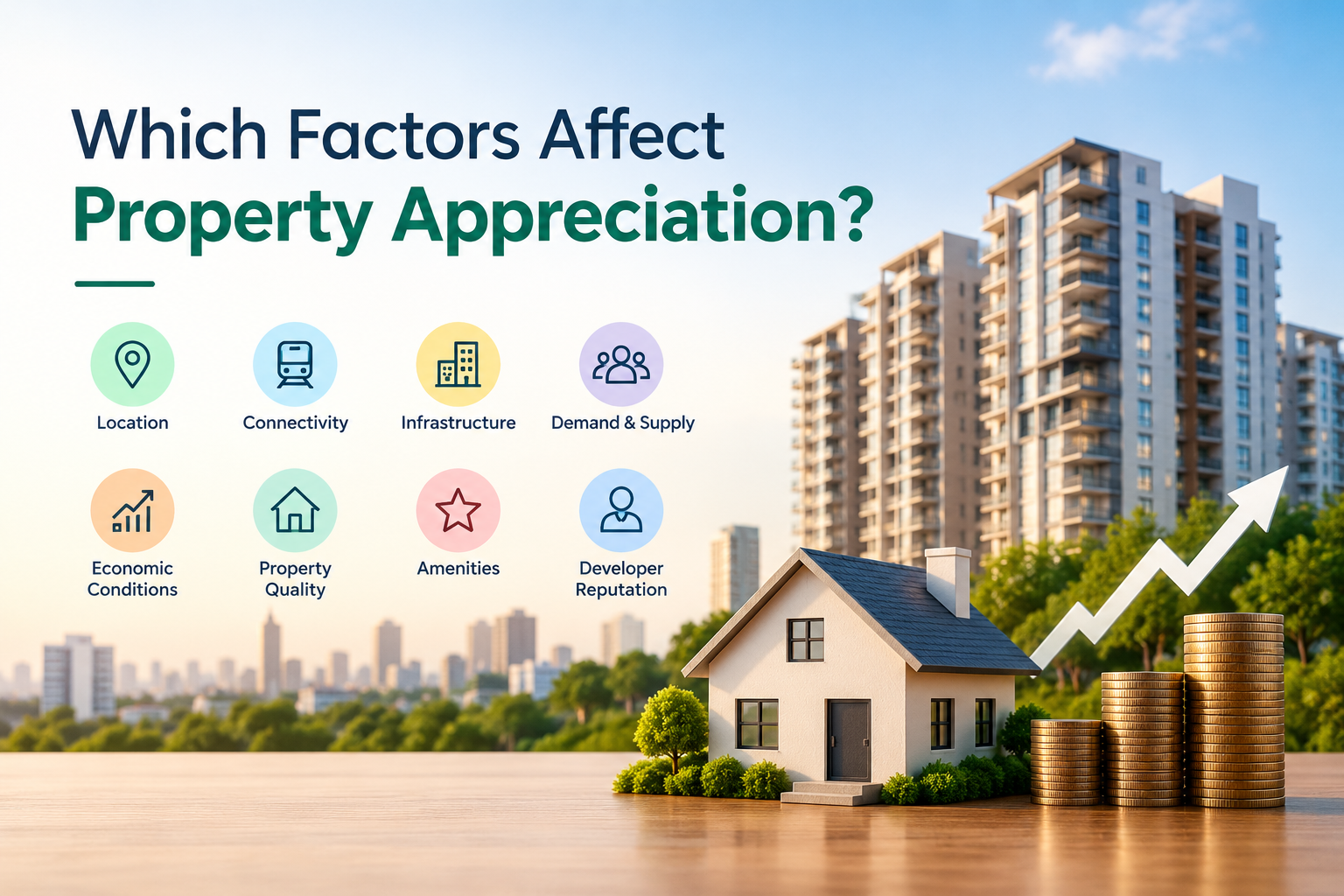
Property appreciation means an increase in a property's market value over time. The factors affecting property appreciation include location, connectivity, infrastructure, demand and supply, economic conditions, property quality, amenities, and the reputation of the developer. Knowing these factors can help buyers and investors evaluate opportunities more effectively before making a property investment.
In simple terms, a property is more likely to appreciate when more people want to live or invest in an area while the supply of desirable properties remains limited. Infrastructure improvements, employment opportunities, better amenities and favourable economic conditions can further strengthen demand and support real estate appreciation.
What Are the Main Factors Affecting Property Appreciation?
1. How Does Location Influence Property Value?
Location is one of the key factors that can influence a property's appreciation over time. Homes close to business districts, schools, hospitals, shopping centres, public transport and recreational facilities generally attract stronger buyer and tenant demand.
A well-connected neighbourhood can also benefit from future development, making its properties more attractive over the long term.
2. Why Do Infrastructure and Connectivity Matter?
New roads, metro lines, highways, airports and public transport can transform the accessibility of a locality. Better connectivity can reduce commuting time and encourage residential and commercial activity.
For example, infrastructure-led development has been identified as an important contributor to property-value growth in Indian markets.
3. How Do Demand and Supply Affect Appreciation?
Property prices are strongly influenced by the balance between demand and available supply.
|
Market condition |
Likely impact |
|
High demand + limited supply |
Upward pressure on prices |
|
Balanced demand + supply |
More stable prices |
|
Low demand + excess supply |
Slower appreciation |
Population growth, migration and new employment opportunities can increase housing demand, while excessive new supply may limit price growth.
4. Can Property Features Increase Appreciation?
Yes. Factors such as efficient layouts, natural light, construction quality, parking, security, green spaces and modern amenities can improve a property's resale appeal.
Well-maintained amenities and lifestyle facilities may also help a property stand out from competing homes in the same locality.
5. How Do Economic Conditions and Interest Rates Matter?
Employment levels, household income, inflation, lending rates and overall economic growth influence people's purchasing power. Lower borrowing costs can encourage more buyers to enter the market, potentially increasing housing demand.
The Reserve Bank of India has also reported that India's residential real estate activity remained robust in 2024, with housing sales exceeding new launches for the third consecutive quarter in Q1 2024-25.
6. Does the Developer's Reputation Affect Appreciation?
A developer's track record can influence buyer confidence and resale demand. Timely delivery, construction quality, regulatory compliance and transparent processes can make a project more attractive to future buyers.
How Can You Assess a Property's Appreciation Potential?
Before making a property investment, evaluate:
- Location and future connectivity
- Existing and planned infrastructure
- Employment and commercial growth nearby
- Local demand versus upcoming supply
- Construction quality and property condition
- Developer track record
- Rental demand and resale potential
Frequently Asked Questions
What is real estate appreciation?
Real estate appreciation refers to the rise in a property's value over time. It can result from rising demand, improved infrastructure, economic growth and limited supply.
Does location play a key role in property appreciation?
Location is a major factor, but appreciation usually results from several factors working together, including connectivity, infrastructure, demand, property quality and economic conditions.
Can infrastructure increase property prices?
Yes. Improved roads, public transport and commercial infrastructure can make an area more accessible and desirable, potentially increasing housing demand and property values.
Conclusion
Property appreciation is rarely driven by one factor alone. A combination of location, connectivity, infrastructure, demand, economic conditions, property quality and developer credibility determines how a property may perform over time. For buyers, researching these fundamentals before investing can provide a clearer understanding of a property's long-term potential.
