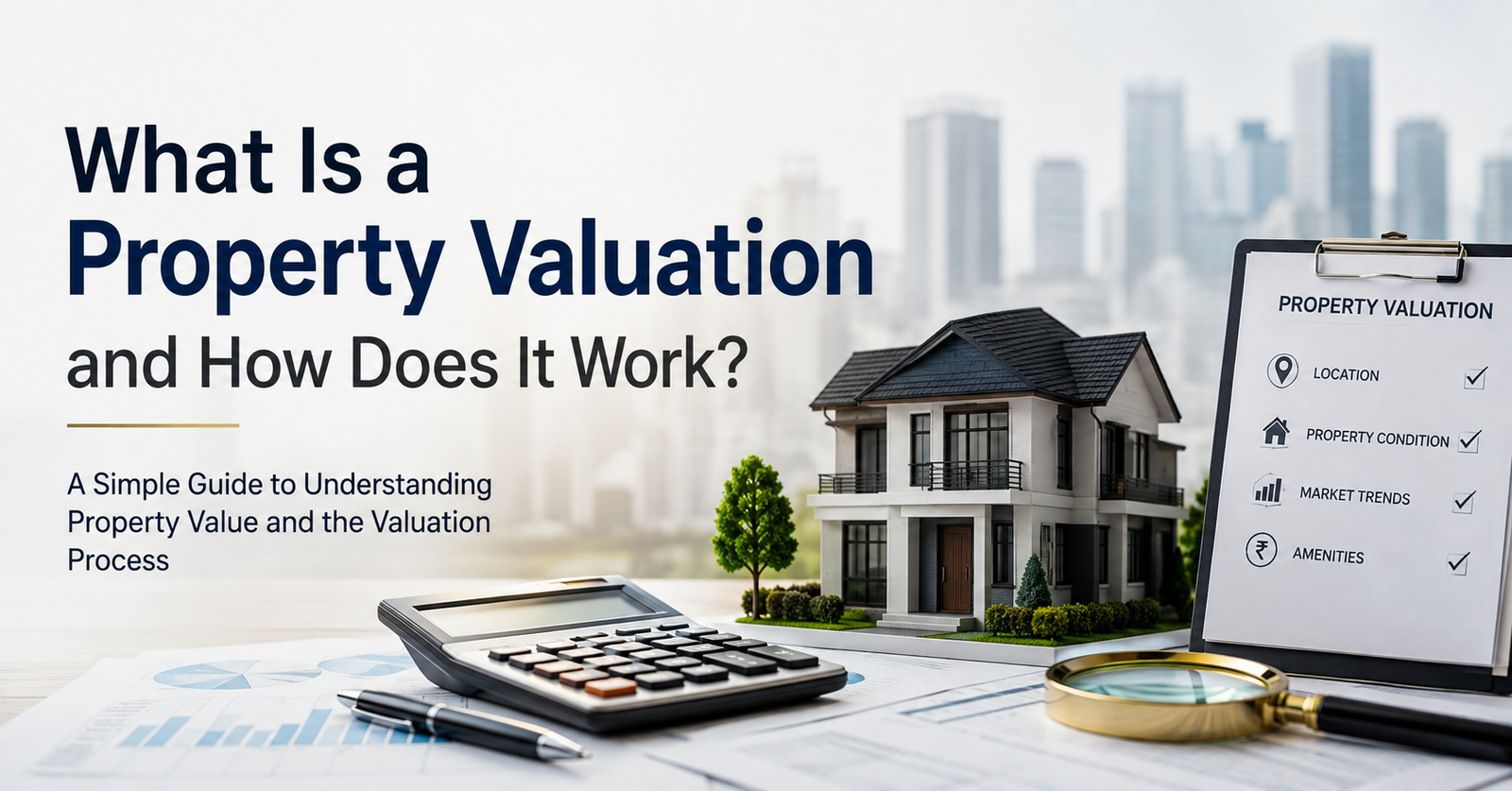
When buying, selling, or investing in real estate, knowing the right price of a property is essential. Property valuation is the systematic process of estimating the fair market value of a property by considering factors such as location, size, condition, demand, amenities, and current market trends. It helps determine whether a property is reasonably priced rather than relying only on an asking price.
A professional property appraisal can benefit buyers, sellers, investors, and lenders. For example, buyers can use valuation to avoid overpaying, while sellers can set a realistic asking price. Banks may also use valuation reports when assessing a property for a home loan or mortgage.
How Does Property Valuation Work?
A typical valuation involves analysing the property and comparing it with relevant market information. The process generally includes:
- Property inspection: The evaluator reviews the size, layout, construction quality, age, condition, parking, amenities, and other physical features.
- Location assessment: Connectivity, nearby schools, hospitals, workplaces, transport, infrastructure, and neighbourhood demand are considered.
- Market comparison: Similar properties in the same or nearby locality are studied to understand prevailing prices.
- Valuation calculation: An appropriate valuation method is selected based on the property type and its intended use.
- Final assessment: The available information is analysed to arrive at an estimated market value.
This structured approach makes real estate valuation more objective and useful for financial decision-making.
What Factors Affect Property Value?
Several factors can influence the final valuation:
- Location: Proximity to transport, schools, hospitals, employment hubs, and major infrastructure can increase demand.
- Size and usable area: Carpet area, built-up area, layout, and efficient use of space matter.
- Age and condition: Newer or well-maintained properties generally attract stronger demand.
- Amenities: Parking, security, lifts, clubhouse, gym, landscaped areas, and other facilities can add value.
- Market demand: Local supply, buyer preferences, and recent transactions influence pricing.
- Future development: Upcoming roads, metro connectivity, commercial centres, and other infrastructure may affect future appreciation.
What Are the Main Property Valuation Methods?
|
Method |
How it works |
Best suited for |
|
Comparison Method |
Compares similar properties and prevailing market prices |
Residential properties |
|
Cost Method |
Estimates land and reconstruction cost, adjusted for depreciation |
Unique or newer properties |
|
Income Method |
Values property based on its rental income potential |
Rental and investment properties |
|
Residual Method |
Considers future development potential and expected returns |
Development properties |
For instance, under the income approach, a property generating ₹30,000 monthly rent earns ₹3.6 lakh annually. At a hypothetical 6% capitalisation rate, its indicative value would be ₹60 lakh (₹3.6 lakh ÷ 0.06).
Why Is Property Valuation Important?
An accurate valuation provides a stronger basis for negotiation and financial planning. A buyer can compare the valuation with the seller's asking price, while a seller can avoid significantly underpricing the property.
It can also help investors assess potential returns and assist lenders in evaluating the property offered as security. Valuation may additionally be relevant when considering taxes, registration costs, and other transaction expenses.
How Is Property Value Calculated?
In simple terms, how property value is calculated depends on the property's characteristics and the valuation method used. A professional may combine comparable market prices, land and construction costs, rental income, location advantages, property condition, and development potential to arrive at a reasonable estimate.
It is important to remember that an online estimate or advertised price is not necessarily the same as a professional valuation. For significant transactions, independent verification and professional advice can provide greater confidence.
FAQs About Property Valuation
Is property valuation the same as the selling price?
No. Valuation is an estimated market value, while the final selling price depends on negotiation, market conditions, and the willingness of both parties to transact.
Who needs a property valuation?
Buyers, sellers, investors, businesses, and borrowers may all benefit from valuation depending on their circumstances.
How often should a property be valued?
There is no universal interval. A fresh valuation can be useful when selling, refinancing, taking a major investment decision, or when market conditions have changed significantly.
Can property valuation help with home loans?
Yes. Lenders may require or use property valuation when assessing a property offered as security for a loan.
Final Thoughts
Property valuation is more than simply finding a price—it is a structured assessment of what a property may reasonably be worth in the current market. Understanding the valuation process helps buyers negotiate intelligently, sellers price realistically, and investors make better-informed real estate decisions.
