For most people, purchasing a property is a major investment that deserves careful consideration. However, while exploring residential properties, buyers often come across terms such as carpet area, built up area and super built-up area. Although these terms describe the size of an apartment, each represents a different measurement.
Understanding these measurements helps homebuyers evaluate the actual usable space, compare property prices and make more informed purchasing decisions.
What Is Carpet Area?
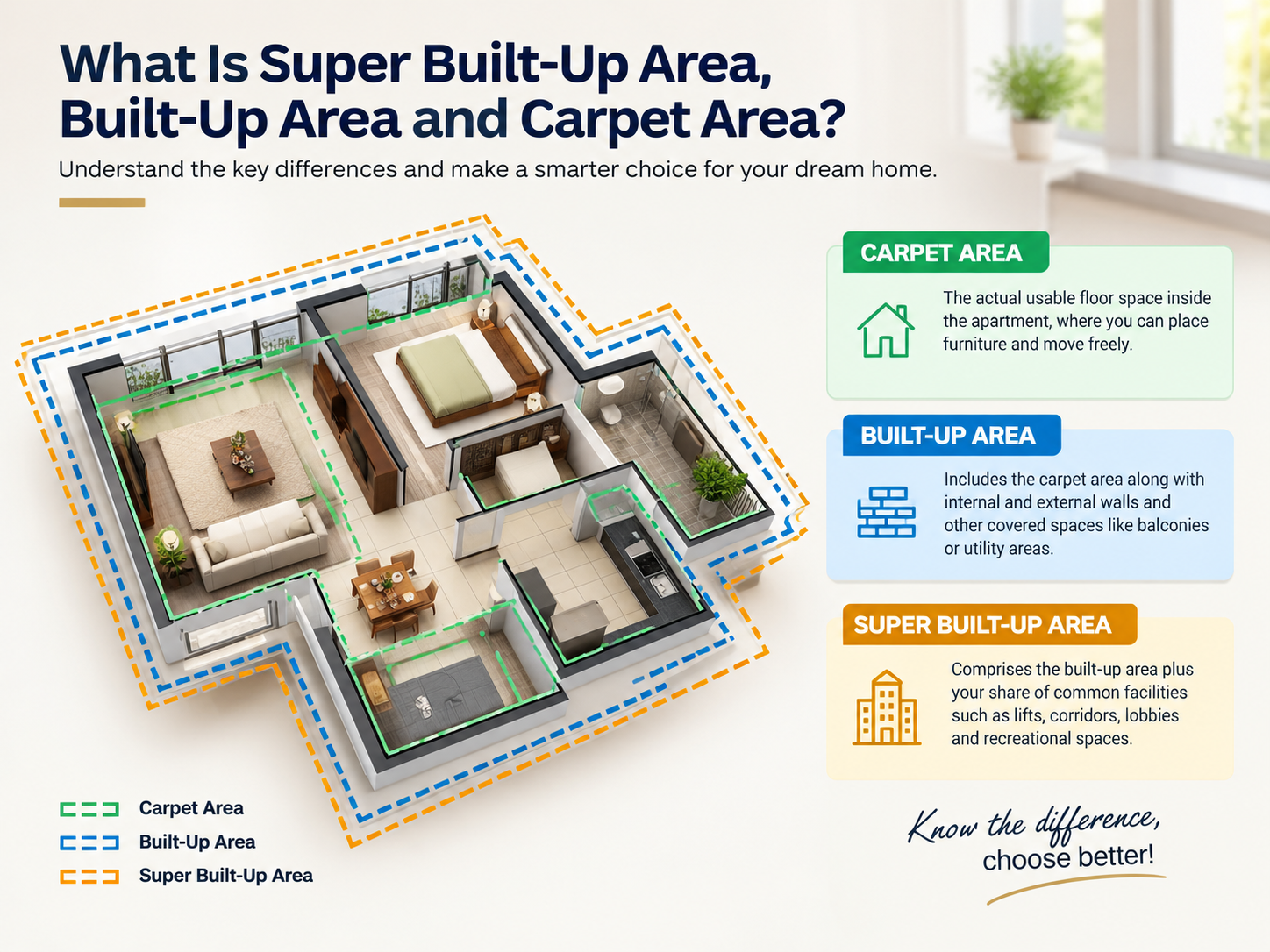
Carpet area refers to the actual usable floor space inside an apartment where residents can place furniture, walk around and carry out everyday activities. In simple terms, it is the area available within the home for personal use.
Under the RERA definition, carpet area includes the net usable floor area and internal partition walls but excludes external walls, service shafts, exclusive balconies or verandahs and open terraces.
For example, the floor space available in your bedroom, living room, kitchen and bathrooms contributes to the carpet area.
It is one of the most important measurements to consider when evaluating the actual living space of a property.
What Is Built-Up Area?
Built up area includes the carpet area along with the space occupied by internal and external walls and other covered areas such as balconies or utility spaces, wherever applicable.
Therefore, the built-up area is generally larger than the carpet area because it accounts for additional structural components of the apartment.
For example, if an apartment has 800 sq. ft. of carpet area, its built-up area could be approximately 950 sq. ft., depending on wall thickness and other included spaces.
What Is Super Built-Up Area?
Super built-up area represents the total saleable area of an apartment. It includes the built-up area along with the apartment's proportionate share of common facilities within the residential project.
These shared spaces may include:
- Lift and staircase areas
- Common corridors and lobbies
- Shared recreational facilities
- Clubhouse and other common amenities
The exact inclusions depend on the project's area calculation and applicable regulations.
This measurement is often referred to as the saleable area and helps developers account for shared building facilities when presenting apartment sizes.
What Is the Difference Between Carpet Area and Built-Up Area?
These measurements vary according to the specific areas considered while calculating the apartment's size. Carpet area represents the usable area inside the apartment, whereas built-up area includes additional structural elements such as walls and certain covered spaces.
Here is a quick comparison:
|
Measurement |
What It Includes |
|
Carpet Area |
Usable floor space and internal partition walls |
|
Built-Up Area |
Carpet area, wall thickness and applicable covered areas |
|
Super Built-Up Area |
Built-up area plus proportionate common areas |
Generally, the relationship follows this order:
Carpet Area < Built-Up Area < Super Built-Up Area
Why Should Homebuyers Understand These Measurements?
Understanding these terms can help buyers:
- Compare properties: Evaluate apartments based on their actual usable space rather than advertised sizes alone.
- Understand pricing: Identify what is included in the quoted property area and price.
- Avoid confusion: Clarify the difference between private living space and shared facilities.
- Make informed decisions: Assess whether an apartment offers sufficient space for their family's requirements.
Before booking a property, always check the carpet area mentioned in the RERA registration details, project brochure and agreement for sale.
Conclusion
Carpet area, built up area and super built-up area are three important measurements in residential real estate. Each serves a different purpose in determining an apartment's size and value. Having a clear understanding of these terms allows homebuyers to compare properties more confidently and choose a home that meets their space requirements and budget.
