What Are REITs and Are They a Good Alternative to Buying Property?
If you want to invest in real estate without buying an apartment, office, or commercial property, Real Estate Investment Trusts (REITs) can be an alternative worth considering. In simple terms, REITs allow investors to buy units in a professionally managed portfolio of income-generating properties and participate in the rental income and potential capital appreciation.
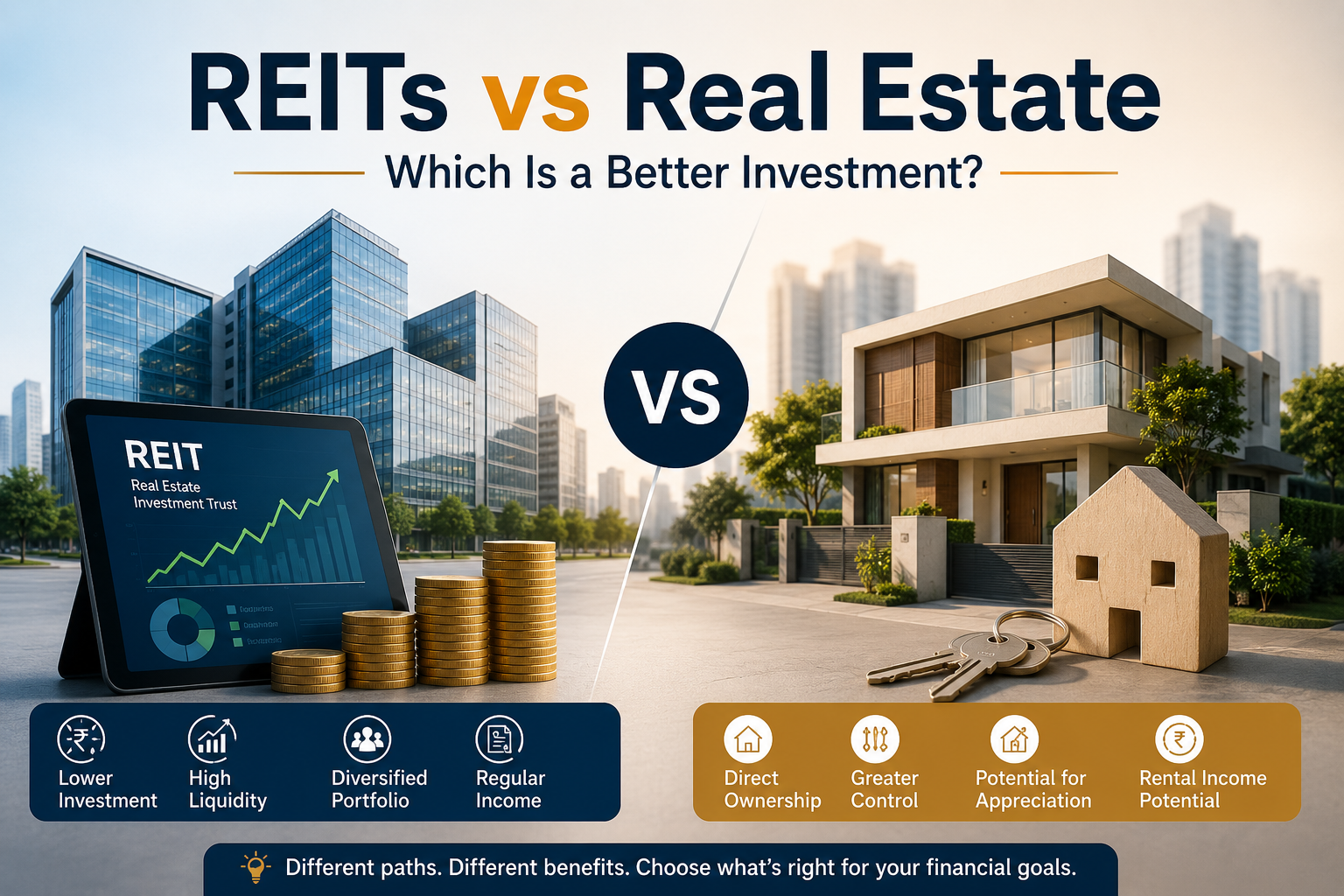
So, in the REIT vs real estate debate, which is better? The answer depends on your objective. REITs generally offer lower entry costs, liquidity and diversification, while physical property provides direct ownership, greater control and the possibility of using the property yourself. For investors primarily seeking financial exposure to real estate rather than a home to live in, REITs can be a practical option.
What Are REITs and How Do They Work?
A REIT is a trust that owns or manages income-generating real estate such as office buildings, business parks, shopping centres and warehouses. Investors purchase REIT units through the stock market instead of buying an entire property.
The process is relatively straightforward:
- Investors buy REIT units through a stock exchange.
- The REIT owns or invests in income-generating properties.
- Tenants pay rent on these properties.
- After expenses and applicable adjustments, distributable income is passed on to investors.
In India, REITs are regulated by SEBI. They can provide exposure to large commercial real-estate portfolios without requiring an investor to arrange the substantial capital normally associated with direct property ownership.
Why Consider REIT Investment in India?
The biggest attraction of REIT investment India is accessibility. Instead of committing a large amount of capital to one property, investors can buy units in a REIT and gain exposure to multiple assets.
Key advantages include:
- Lower entry barrier: REIT units can generally be purchased with a much smaller investment than physical property.
- Liquidity: Listed REIT units can be bought and sold through the stock market.
- Diversification: A single REIT can provide exposure to several properties and tenants.
- Professional management: Property management, leasing and operations are handled by professionals.
- Potential regular income: REITs distribute a significant portion of their distributable cash flows to investors.
India's listed REIT market has also expanded beyond traditional office assets, with listed trusts providing exposure to segments such as commercial offices and retail properties. This gives investors more ways to participate in organised real estate without directly owning a building.
REIT vs Physical Real Estate: What Is the Difference?
| Factor | REITs | Physical Real Estate |
|---|---|---|
| Initial investment | Relatively low | Usually high |
| Liquidity | Higher | Lower |
| Ownership | REIT units | Direct property ownership |
| Diversification | Higher | Usually concentrated |
| Management | Professional | Owner's responsibility |
| Rental income | Distributed by REIT | Directly received by owner |
| Control | Limited | High |
| Market volatility | Visible daily | Less visible, but still present |
The choice ultimately depends on what you want from your real estate investment. If you want a home, land or a property you can personally use, buying physical real estate remains more appropriate. If you want investment exposure, diversification and liquidity, REITs may be more suitable.
Are REITs Better Than Buying Property?
Not necessarily. REITs solve some of the biggest challenges associated with physical property, but they introduce market-related risks of their own.
REIT prices can fluctuate with interest rates, economic conditions, property-sector performance and investor sentiment. Physical property, meanwhile, can involve maintenance expenses, registration costs, taxes, financing costs and a longer selling process.
Therefore, rather than asking whether REITs are universally better, investors should ask: Which option fits my financial goal, risk tolerance and investment horizon?
Who Should Consider REITs?
REITs may be worth considering if you:
- Want real-estate exposure without buying a property.
- Prefer a relatively liquid investment.
- Want to diversify beyond traditional equity and debt investments.
- Are comfortable with market-linked price fluctuations.
- Prefer professional property management.
Before investing, examine the REIT's property portfolio, occupancy levels, tenant quality, debt, distribution history and valuation.
FAQs About REITs
Are REITs a good alternative to buying property?
They can be, particularly for investors seeking financial exposure to income-generating real estate without the cost and responsibilities of direct ownership. However, they are not a substitute for buying a home for personal use.
How do REITs make money?
REITs primarily earn from rental income generated by their underlying properties. Investors can receive distributions and may also benefit if the market value of their REIT units increases.
Are REITs safe in India?
Indian REITs operate within a SEBI-regulated framework, but they are still market-linked investments and do not offer guaranteed returns. Investors should assess the underlying assets, debt and cash flows before investing.
REIT or property: which should you choose?
For direct ownership, personal use and greater control, physical property may be preferable. For accessibility, diversification and liquidity, REITs can be a compelling alternative.
In short, REITs do not replace physical real estate; they offer a different way to invest in it.
